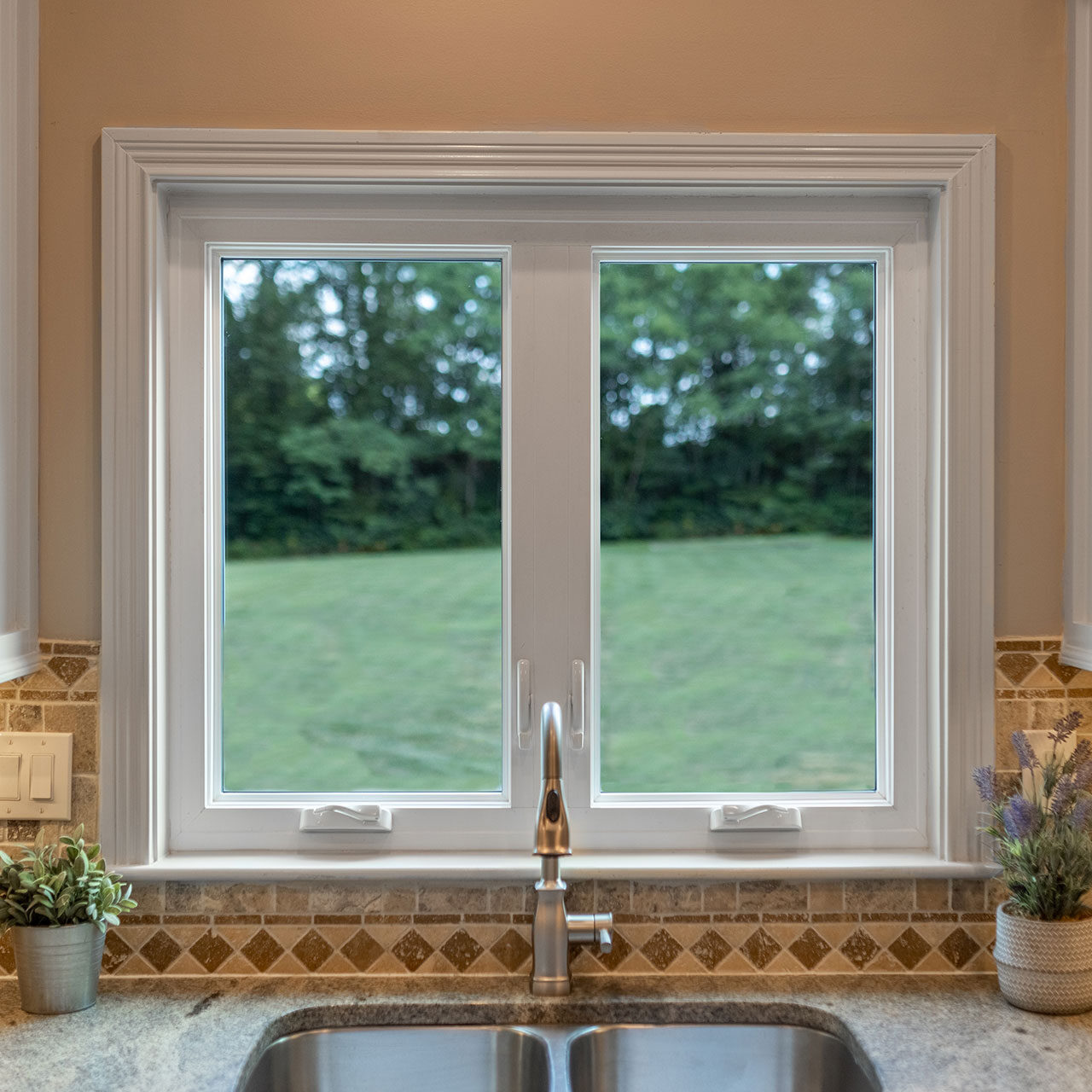
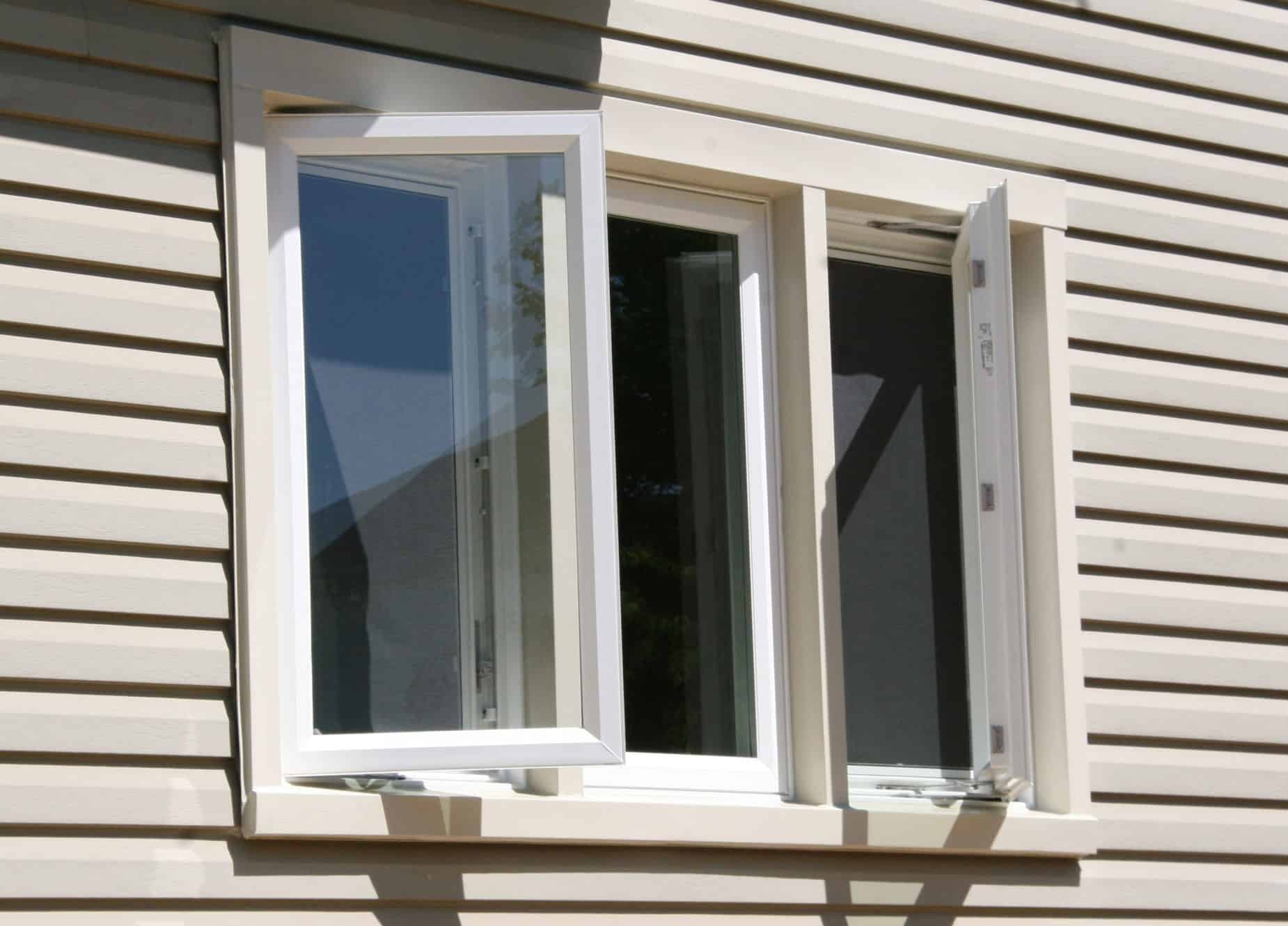
Casement windows are hinged on one side — left or right — and swing outward like a door when operated by a crank handle at the bottom of the frame. Unlike double-hung windows, which only open halfway, casement windows open completely from top to bottom, allowing the full panel to catch incoming air and direct it into your home.
When closed, the sash presses firmly against the frame on all four sides, creating a compression seal that is tighter than virtually any other operable window style. This makes casement windows among the most energy-efficient operable windows available — a meaningful advantage in Albany's cold winters and humid summers.
Casement windows have specific components — hinges, crank mechanisms, and multi-point locks — that wear out over time. Here's what to watch for.
The crank operator is the heart of a casement window. When it becomes stiff, stripped, or stops engaging the sash entirely, the window becomes difficult or impossible to open. In some cases, hardware can be replaced without replacing the full window — but if the frame is also warped or the seal has failed, full replacement is the better investment.
Casement windows use multi-point locking systems that engage at multiple spots along the frame when you turn the handle. If the window won't lock fully, doesn't compress against the weatherstripping evenly, or shows gaps when closed, both security and energy efficiency are compromised. This is often a sign of a warped sash or failed hardware.
The compression seal is the primary performance advantage of casement windows. If you feel cold air coming through a closed casement, the weatherstripping has failed or the sash has warped away from the frame. At that point, the window is no longer delivering the energy efficiency it was designed for.
Our Casement Window Installation Process
Free In-Home Consultation and Estimate
A Herman Exterior Homes consultant visits your home, evaluates your existing casement windows (or the openings where you'd like casement windows installed), and walks you through your options. You'll get a written estimate with no surprises and no sales pressure.
Custom Measurement and Product Selection
We measure each opening precisely and help you select the right casement configuration — single panel, double casement (French-style), or casement combined with a fixed picture panel. You choose the frame color, glass package, hardware finish, and grid pattern. Everything is custom-ordered to fit your home exactly.
Professional Installation
Our crew removes your old windows, prepares the opening, and installs your new casement windows with attention to proper hinge alignment, seal compression, weatherproofing, and trim finishing. Casement windows require precise installation to ensure the sash closes squarely against the frame on all four sides — we do this right the first time.
Final Walkthrough and Cleanup
We walk through the completed installation with you, confirm that every panel operates correctly, and leave your home exactly as we found it — no debris, no dust, no damage to surrounding surfaces.
Casement Window Installation FAQ
How are casement windows different from double-hung windows?
Double-hung windows slide vertically, with one or both sashes moving up and down within the frame. Casement windows are hinged on one side and swing outward via a crank handle. The key practical differences: casements open fully (double-hungs open halfway at most), casements have a tighter compression seal when closed, and casements offer an unobstructed view with no center rail dividing the glass.
If you are looking for Double Hung Windows, Click here.
Are casement windows more energy efficient than double-hung windows?
Yes, generally. When closed, a casement window presses against weatherstripping on all four sides simultaneously — a compression seal that leaves virtually no gap for air infiltration. Double-hung windows slide within a track and are more susceptible to air leakage over time. For Albany's cold winters, the energy efficiency advantage of casement windows is real and measurable.
Do casement windows swing in or out?
Casement windows swing outward. This is by design — the outward swing means the wind can't blow the window open and allows the sash to catch air and direct it into the room. Because they swing out, you'll want to make sure there's adequate exterior clearance — they're not ideal directly above a busy walkway or deck railing.
What is a double casement window?
A double casement (sometimes called a French casement) uses two panels that meet in the center with no post between them — both panels crank open from the center outward. This provides an even wider opening and a completely unobstructed view when both panels are open. French casements are popular for living rooms and dining rooms where maximum airflow and views are priorities.
What's the difference between a casement window and an awning window?
Both are crank-operated and create a compression seal when closed. The difference is in how they open: casement windows are hinged on the side and swing outward horizontally; awning windows are hinged at the top and open outward from the bottom. Awning windows allow ventilation even in light rain (the sash acts like an awning). They're often used in basements, bathrooms, or paired below a larger fixed window.
What areas do you serve?
We serve Albany and the greater Capital District, including Schenectady, Troy, Latham, Cohoes, Guilderland, Bethlehem, Colonie, Clifton Park, Saratoga Springs, and surrounding communities. Contact us to confirm service in your specific area.
Get Your Free Bay and Bow Window Installation Estimate in Albany, NY
Ready to stop losing heat through old, inefficient windows? Contact Herman Exterior Homes today to schedule your free in-home estimate. We'll assess your windows, explain your options, and give you a written quote with no pressure and no obligation. Call us or fill out our contact form — we typically respond within one business day