Premier Siding
Siding Contractors in Saratoga Springs, NY
We are the Premier Siding Contractor in Saratoga Springs, and we have reviews to prove it. Call us today.

Flexibility and savings for your exterior projects.

0% Interest Financing
Low Monthly Payments
No Hidden Fees
Saratoga Springs isn't a single siding market — it's at least two, and the line between them matters before a single panel goes up. On the East Side, in Franklin Square, and along the streets flanking Broadway, homes date to the 1860s through 1900s: Italianate facades, Queen Anne profiles, board-sheathed walls built before housewrap existed. Those properties fall under the jurisdiction of the Saratoga Springs Design Review Commission (DRC), which reviews exterior material changes against the U.S. Secretary of the Interior's Standards for Rehabilitation before a building permit is issued. On the city's western and northern edges — Geyser Crest, the Wilton town line, the Saratoga Lake corridor — you're working with post-1950 ranches, split-levels, and lakeside conversions where material selection is simpler and the approval process is straightforward.
Herman Exterior Homes works in both. We're about 35 minutes down the I-87 Northway from Saratoga Springs, and we've installed siding across the full range of the area's housing stock. If your property is in a historic district, we'll tell you upfront what materials are likely to get approved and which aren't. If it isn't, we'll focus on getting you the right product for Saratoga's climate
In Saratoga, the right material depends less on taste and more on where the house sits and when it was built. Here's how it usually breaks down. We check your address against the district maps at the estimate, so you know before you pick a color.
| Area | Typical homes | DRC review | What usually works |
|---|---|---|---|
| East Side, Franklin Square, Broadway Historic District | 1860s to 1900s Italianate, Queen Anne, and Federal homes | Yes | Fiber cement clapboard in a narrow exposure, fiber cement shingle on gables, composite or LP SmartSide case by case |
| Ballston Avenue, Church Street, Lake Avenue, Nelson Avenue corridors | Late 1800s and early 1900s homes | Yes, somewhat less strict | Fiber cement, composite, LP SmartSide. Vinyl is rarely approved. |
| West Side and North Broadway outside the historic overlay | Folk Victorians, vernacular Queen Annes, larger estate homes | No | LP SmartSide, Everlast composite, Monogram vinyl in low-gloss colors, fiber cement |
| Geyser Crest, Route 9 and Malta Road near the Wilton line | 1950s to 1970s ranches, split-levels, and capes | No | Insulated vinyl, MainStreet or Monogram vinyl, LP SmartSide |
| Saratoga Lake, city side | Cottages and year-round conversions | No | Everlast composite, Monogram, CedarBoards Insulated, LP SmartSide |
| Excelsior Park and the Geyser Road corridor | Newer HOA developments | HOA approval instead | Whatever the HOA standards allow. Composite and Monogram usually pass. |
These are installed prices for a typical Saratoga home, including housewrap, trim, and removal of the old siding.
| Material | Installed cost per square foot |
|---|---|
| Vinyl (CertainTeed MainStreet or Monogram) | $8–$14 |
| Insulated vinyl (CertainTeed CedarBoards) | Add $1–$2 over standard vinyl |
| Fiber cement (James Hardie) | $12–$18 |
We quote composite and LP SmartSide house by house, because trim detail and profile move the number more than the panel does. Estimates are free.
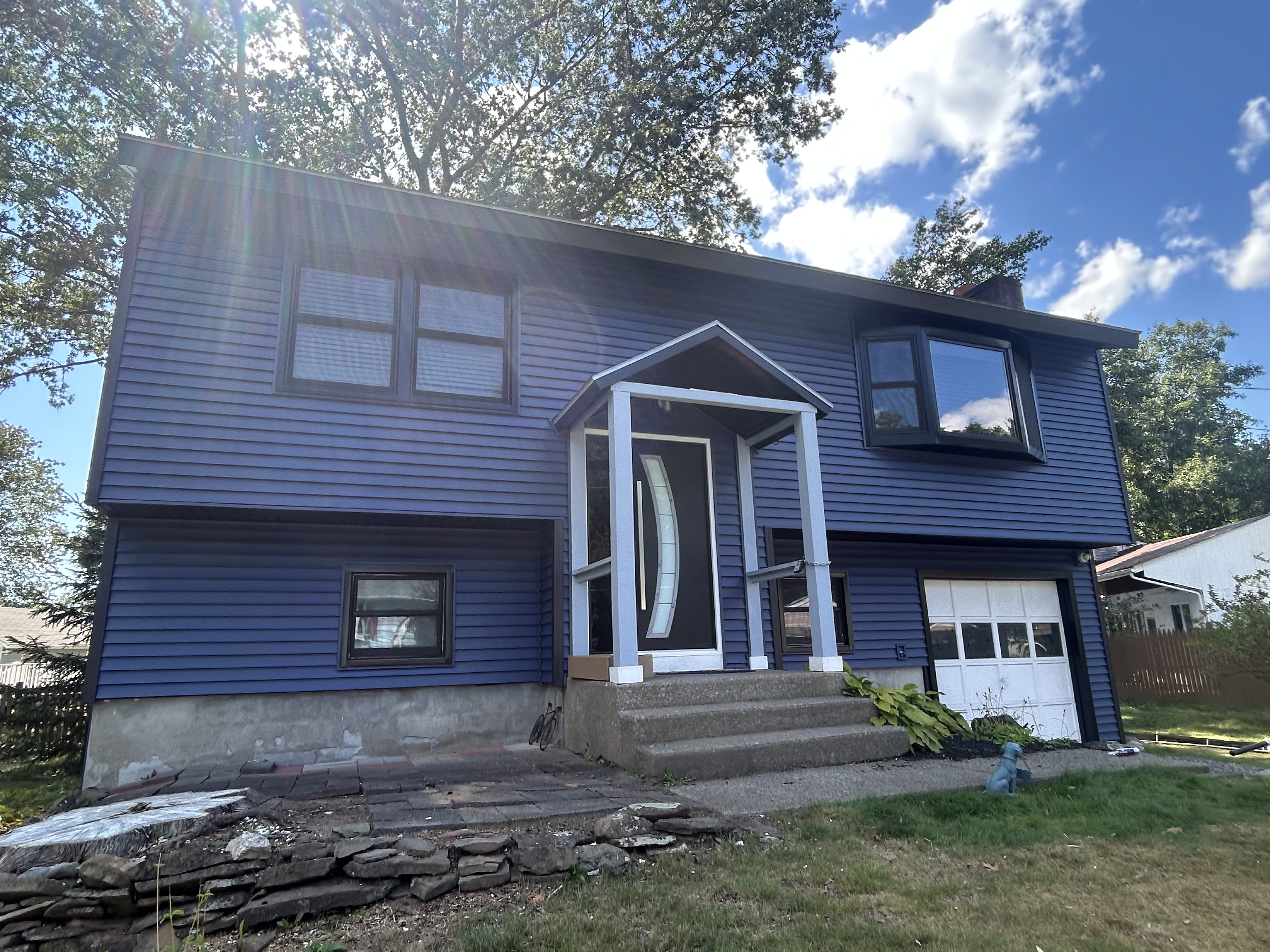
Here is a fresh Certainteed Monogram installation done in Saratoga Springs, NY in August of 2026.
Vinyl is the most-installed siding in Saratoga County, and on the right house it's an easy call. It lasts 30 to 40 years with almost no upkeep and costs well under fiber cement or composite. If your home was built after 1950 and sits outside the historic districts and the Architectural District corridors, vinyl is almost certainly on the table. That covers most of Geyser Crest, the Route 9 and Malta Road corridors near the Wilton line, post-war homes near Skidmore College, and cottages on the city side of Saratoga Lake.
Grade matters more here than it does in Albany. Saratoga sees about 70 freeze-thaw days a year, January lows around 14°F, and 70 to 80 inches of snow. Budget panels can turn brittle in that kind of cold. CertainTeed Monogram, at about 0.046" thick, holds up well. MainStreet, at about 0.042", is the value option. Either way, the expansion gaps your installer leaves matter as much as the panel itself.
Composite earns its price on lake houses, North Broadway estates, and HOA builds where the look has to stay crisp for decades. It doesn't need paint and doesn't rot, and the DRC has approved it on some contributing homes when the profile and texture match the original siding. Our composite siding contractors in Saratoga Springs page goes into where it makes sense and how DRC applications go.
Saratoga Springs homeowners know that curb appeal matters in this town, but so does durability. James Hardie siding in Saratoga Springs delivers both. Whether you're near Congress Park dealing with mature trees and shade-induced moisture, or out toward the lake with wind exposure, Hardie Board performs.
The fiber cement composition means zero rot, zero insect issues, and a finish that holds up to our notoriously unpredictable Saratoga County weather. It's the siding choice that looks as good in year fifteen as it did on day one.
HardiePlank in the right profile is frequently the best path for East Side and West Side homes where original wood clapboard is failing and the DRC needs a material that reads as wood. Hardie's 30-year warranty and Class A fire rating hold up well over Saratoga's ~70 annual freeze-thaw cycles.
Everlast is a mineral composite with an acrylic capstock and a surface texture cast from real rough-sawn cedar. There's no wood fiber in it, so nothing soaks up water, which makes it our strongest performer on Saratoga Lake properties. The color runs through the plank, so a scratch from a branch doesn't show white.
Diamond Kote is built on that same tough LP SmartSide platform, but the finish is the real game-changer. Instead of being painted on-site, the color is baked on in the factory. It's incredibly resistant to peeling, chipping, and fading. If you want a vibrant color that will actually stay vibrant through years of harsh sun and snow, this is the product we recommend.
Herman is a CertainTeed certified installer. That matters more than it sounds, because the warranty tier you get depends on the installer's credential, not just the product. Three CertainTeed lines cover almost every Saratoga house we see.
| Product | Best fit |
|---|---|
| MainStreet | Post-1980 homes in good shape where budget leads. Seven profiles and about 25 colors. |
| Monogram | Corner lots, colonials near North Broadway, and lake houses. Deeper wood grain, about 38 PermaColor colors, and rated to 210 mph wind load. |
| CedarBoards Insulated | Pre-1960 ranches and capes with thin walls. Foam backing cuts thermal bridging by about 30% and usually lowers heating and cooling costs 5–15%. |
A lot of Geyser Crest ranches went up with board sheathing, little or no wall insulation, and no housewrap. Re-siding one with CedarBoards and new housewrap is real energy work, not just a new look. CertainTeed vinyl isn't the answer for contributing homes on the East Side or in Franklin Square, and we'll tell you that at the estimate.
LP SmartSide is engineered wood. It's made from wood strands bonded with resin and treated with zinc borate, so it holds up to moisture, rot, and insects that would ruin real wood. It reads like wood clapboard from the street, ships primed, gets painted at install, and needs a repaint every 10 to 15 years. LP backs it with a 50-year limited warranty.
It's a natural fit on Geyser Crest ranches and split-levels, and on West Side Folk Victorians where the original clapboard is past saving and the house sits outside the strictest part of the overlay. On contributing historic homes it isn't automatic. The DRC can approve it when the original wood is documented as beyond repair and the reveal and trim match closely. That application needs elevation drawings, product literature, color samples, and photos of the existing siding, submitted at least three weeks before the next DRC meeting. We put the package together for you.
One thing to know: woodpeckers can drill into engineered wood. On the wooded streets north of downtown, fiber cement or composite is the safer pick.
Saratoga's architectural diversity—from Victorian mansions to Adirondack-style cottages—often features beautiful shake siding. We install composite shakes that give you that same rich, dimensional look without the maintenance burden.
Whether you're restoring a historic property near Congress Park or building new near the lake, these modern shakes deliver authentic character that stands up to Saratoga County's demanding weather while keeping their beauty intact.
Every project starts with a site visit. We look at the age of the house, the existing wall assembly, the neighborhood, and whether DRC review applies before we talk materials or pricing. We pull permits, manage the DRC application process when required, and handle every trade involved in a full re-side: housewrap, rigid foam, window and door trim, corner boards, and siding installation.
We run crews in Saratoga Springs on a regular basis from our shop in Schenectady — about 35 minutes up the I-87 Northway to a typical Saratoga Springs job site.
Our service area from Saratoga Springs includes Wilton, Gansevoort, Greenfield Center, Malta, Ballston Spa, Schuylerville, Round Lake, and Stillwater. For Saratoga Lake properties, wind-driven moisture from the water changes the conversation around material choice — we factor that in from the first visit.

It depends on where your home sits. Properties inside the East Side Historic District, Broadway Historic District, Franklin Square, and the Architectural District corridors along Ballston Avenue, Church Street, Lake Avenue, and Nelson Avenue all require DRC review before a building permit is issued. If your home is in Geyser Crest, Wilton, Saratoga Lake, or any area outside those designated districts, you follow a standard building permit process — no DRC review. We check your address at the start of every estimate so there are no surprises.
In most cases, no — not if the structure is a contributing property within the historic district. The DRC reviews against the U.S. Secretary of the Interior's Standards for Rehabilitation, and swapping original wood clapboard for vinyl on a contributing structure typically won't get approved. Fiber cement in the right profile — HardiePlank Select Cedarmill, for example — is often the approved path when original wood is failing. We'll advise you on what's realistic before you commit to a material.
We do, though we plan accordingly. Track season — late July through early September — means downtown Saratoga is busier, parking is tighter near the East Side and Broadway, and some homeowners prefer to schedule project starts before or after the season. If you're planning work near the Race Course or on Congress Park-adjacent streets, we'll talk through scheduling at the estimate. Outside the downtown core — Geyser Crest, Wilton, the lake corridor — racing season has no real effect on project scheduling.
Saratoga Springs averages 70–80 inches of snowfall per year, with January lows around 14°F and over 70 freeze-thaw days annually — the 300-foot elevation puts you above Albany's typical numbers. Fiber cement and composite siding handle freeze-thaw well because they don't expand and contract the way vinyl does in extreme cold, and they don't absorb moisture the way wood does. Premium insulated vinyl — CertainTeed CedarBoards, for example — performs well on post-1950 suburban homes where the energy efficiency gain also matters. The right answer depends on your home's age, wall assembly, and district.
For a typical Saratoga Springs home, installed vinyl runs $8–$14 per square foot, including housewrap, trim, and removal of the old siding. Insulated vinyl like CertainTeed CedarBoards adds about $1–$2 per square foot.
Almost always. Most of those homes have board sheathing, thin or no wall insulation, and no housewrap. CedarBoards Insulated cuts thermal bridging by about 30%, and in Saratoga's winters the upgrade pays back faster than it would in a milder market.
Monogram is thicker, has a deeper wood grain, comes in about 38 fade-resistant colors, and is rated to 210 mph wind load. MainStreet is thinner and more budget-friendly, with seven profiles and about 25 colors. MainStreet works well on Geyser Crest ranches and Wilton new builds. Monogram is worth it near the lake or on any street-facing house where looks count.
Sometimes. The DRC generally prefers in-kind wood replacement, but it can approve LP SmartSide when the original wood is documented as beyond repair and the new reveal and trim match closely. We'll tell you at the estimate whether your house has a realistic shot.
Most homes take two to five days. Larger homes or houses with a lot of trim detail can take about a week. If DRC review applies, plan for the application to be in at least three weeks before the next meeting.
We provide comprehensive exterior renovations—including roofing, siding, and gutters—throughout the Northeast. Our service area spans the Capital District, from Lake George down to Catskill, as well as parts of Southern Vermont and Western Massachusetts.
Unsure if we cover your neighborhood? Contact us! We are likely working on a home near you.