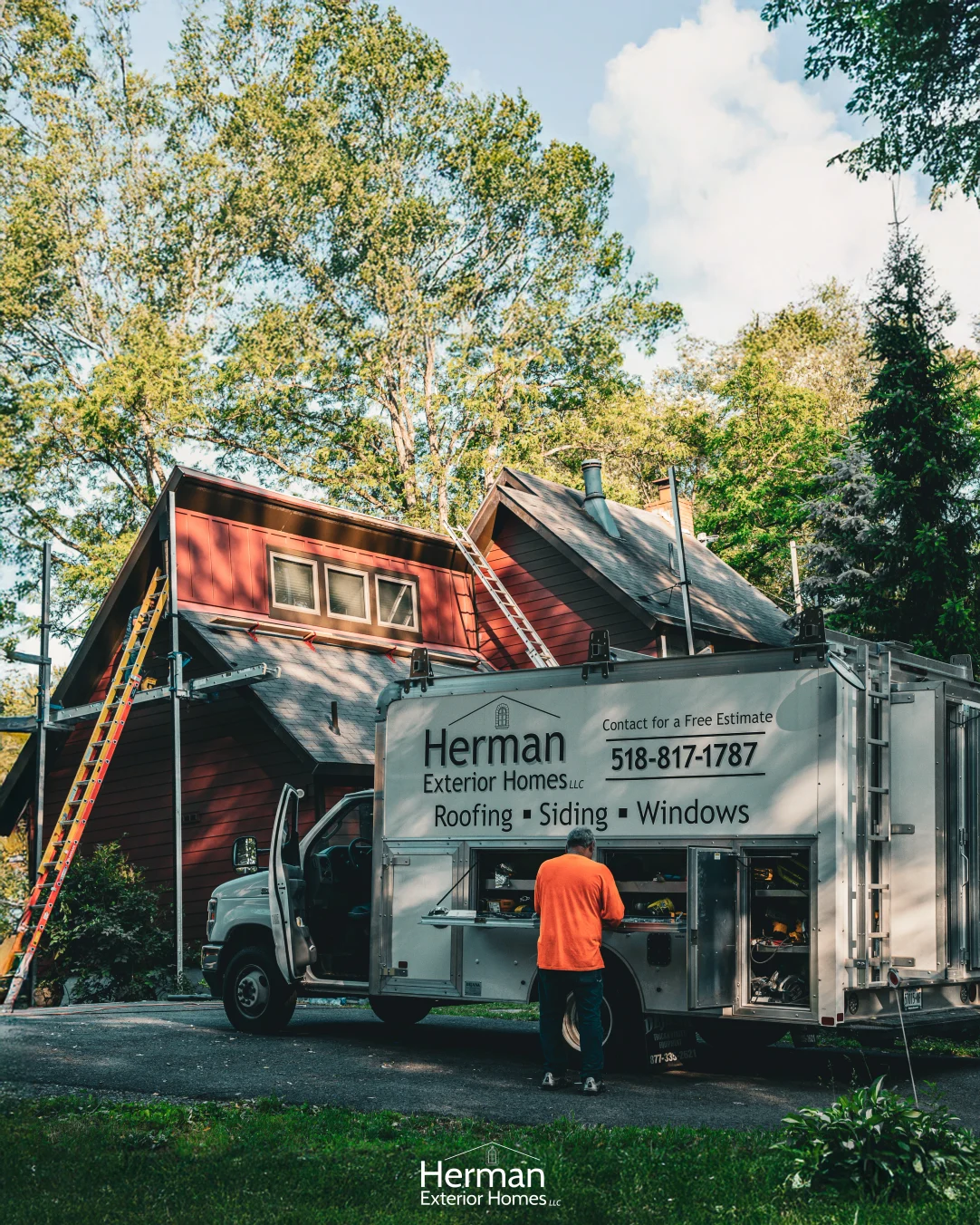
Utica presents one of the most challenging environments in New York State for exterior cladding. With an average of 96 inches of snow annually, intense lake-effect snow bands off Lake Ontario, and a median construction year of 1940, local houses require an experienced touch. Nearly half of all residences in Utica were built before World War II, meaning original wood clapboard, layered asbestos shingles, and aging aluminum siding are common sights from Cornhill to South Utica.
At Herman Exterior Homes, our comprehensive installation process addresses these legacy materials safely and thoroughly, ensuring your underlying structure is sound before new cladding is installed
Our Services
Siding in Utica, NY
Utica winters are defined by severe lake-effect snow off Lake Ontario, which can dump 1 to 3 inches per hour alongside wind gusts reaching 40–50 mph. With January average lows hovering around 15°F, winter humidity near 88%, and freeze-thaw cycling lasting from October through April, material selection and structural weatherization are crucial to your home's longevity.
Call us TodaySiding Materials Built for Utica's Weather
The go-to solution for cost-conscious Utica budgets. Modern 0.044–0.046 inch premium vinyl panels resist cold-weather impact cracking far better than builder-grade options from previous decades. We install vinyl with precise expansion allowances, preventing panels nailed tight in summer heat from buckling or cracking during a 15°F winter night.
Insulated Vinyl Siding in Utica
Featuring contoured foam backing laminated directly to the panel, insulated vinyl is ideal for Utica’s pre-war homes with uninsulated stud bays. It provides continuous R-value insulation across wall studs, stiffens siding against high winds, and flattens out uneven board sheathing. During long Mohawk Valley heating seasons, the energy savings make this a high-return upgrade.
The premier choice for Cornhill Victorians and South Utica Colonial Revivals. Fiber cement remains dimensionally stable through freeze-thaw cycles, resists impact from wind-driven ice, and offers smooth or wood-grain lap profiles that replicate historic clapboard. It also holds paint significantly longer than natural wood in Utica’s high humidity.
Gables, porch knee walls, and entry surrounds on older Utica properties benefit greatly from vertical board and batten, shake, and scallop accents. We frequently mix cladding profiles to restore the original architectural character of Queen Anne and Craftsman facades.
Engineered wood combines the natural warmth of real wood with treated wood-strand construction that resists moisture rot and insect damage. It serves as an excellent middle-ground option for homeowners seeking authentic texture on historic streets without the endless maintenance cycle of traditional cedar.
Our Siding Brands in Utica
Learn MoreGive Us a CallJames Hardie is the gold standard for fiber cement siding. Every plank we install in Utica is manufactured to the HZ5® specification — engineered specifically for northern climates in Hardie's climate zone system. HZ5 boards resist moisture absorption and severe freeze-thaw conditions, making them ideal for Mohawk Valley winters.
For Utica homeowners looking for a low-maintenance exterior, Everlast composite siding provides a long-lasting solution. Its solid polymeric core contains no wood fibers, meaning moisture cannot cause swelling, rot, or delamination. This is a major advantage for pre-war homes where older sheathing requires a breathing, water-resistant cladding system.
Learn MoreGive Us a CallLearn MoreGive Us a CallCedar shakes are deeply rooted in Utica's architectural history, commonly found on Queen Anne and Craftsman gables throughout South Utica. For historic restorations, natural white cedar or western red cedar offers authentic texture, natural insulating properties, and graceful aging that manufactured options struggle to replicate.
LP SmartSide Siding in Utica
LP SmartSide is a top-requested product across the Mohawk Valley because it bridges the gap between natural wood and fiber cement. Treated through LP's proprietary SmartGuard® process with zinc borate and water-resistant resins, it defends against rot, termites, and fungal growth while offering a 50-year limited warranty.
Learn MoreGive Us a CallDiamond Kote Siding
Diamond Kote applies a factory-baked finish to LP SmartSide substrates, backed by a 30-year no-fade warranty. In Utica, where the outdoor painting season is short (late May through September), factory-applied finishes eliminate the risk of peeling caused by snowpack reflection, salt spray, and winter abrasion.
Learn MoreGive Us a CallWhat Siding Costs in Utica, NY
| Material |
Installed Cost Per Sq Ft |
Typical Utica Project Range |
| Standard vinyl |
$4 – $7 |
$8,000 – $14,000 |
| Insulated vinyl |
$6 – $10 |
$12,000 – $19,000 |
| Engineered wood |
$7 – $11 |
$13,000 – $21,000 |
| Fiber cement |
$8 – $13 |
$15,000 – $25,000 |
Siding By Neighborhood: Where We Work in Utica
- Cornhill - Contains one of the densest concentrations of pre-1939 housing in the nation, featuring Italianate Victorians and three-decker multi-families. Typical scope involves complete tear-off to sheathing, sill rot repair, and installing fiber cement or premium vinyl with custom trim.
- South Utica - Home to Colonial Revivals, Tudors, and Craftsman bungalows built primarily between 1920 and 1940, along with postwar ranches along York, Warren, and Sunset Streets. Excellent candidates for fiber cement lap and insulated vinyl..
- East Utica - Characterized by tight-lot two-family homes and workers' cottages. We manage scaffolding logistics and tight property-line access to ensure clean, safe installations.
- West Utica and Downtown/Bagg's Square edges - Features mixed-frame housing and converted multi-unit properties with legacy siding layers. We conduct thorough substrate inspections prior to installation.
- North Utica - Features postwar single-family homes north of the Mohawk River with simpler wall profiles, making them prime candidates for efficient insulated vinyl retrofits.
- We also serve surrounding Oneida County communities, including New Hartford, Whitesboro, Yorkville, New York Mills, Marcy, Deerfield, Clinton, and Rome.
The Two-Family Specialty: Utica's Signature Housing Type
More than one-third of Utica’s housing stock consists of duplexes and small multi-family structures. Residing a two-family property requires specialized project planning:
Wall height and staging. Multi-story rear walls require professional staging and scaffolding to execute clean, safe installations across every story.
Double everything. Doubled entries, stacked porches, twin meter banks, and multiple utility penetrations demand rigorous flashing to prevent water intrusion.
Rental economics. For owner-occupants and real estate investors, insulated siding reduces winter heating bills for both units while boosting curb appeal and listing value in an appreciating market.
Utica Siding FAQ's
How much does siding cost in Utica, NY?
Most full siding replacements in Utica cost between $8,000 and $25,000 depending on material choice, home square footage, and substrate condition. Standard vinyl costs roughly $4–$7 per square foot installed, while fiber cement ranges from $8–$13 per square foot. Multi-family homes or properties requiring sheathing repairs land at the higher end of the scale.
What is the best siding for Utica's climate?
Insulated vinyl and fiber cement perform best in Utica. Given the city's 96 inches of annual snowfall, lake-effect winds, and freeze-thaw cycles, siding needs cold-weather impact resistance and thermal efficiency. Insulated vinyl provides continuous insulation across studs to reduce winter heating costs
Do Utica's older homes need extra work before new siding?
Yes, frequently. Homes built before 1940 often feature open board sheathing, missing house wrap, or localized rot near sills and porch intersections. Assessing and repairing the substrate before installing new siding ensures long-term structural integrity and avoids unexpected mid-project delays.
How long does siding installation take in Utica?
A typical single-family home replacement takes 3 to 7 working days. Two-family residences or projects requiring significant tear-off and repair work take 1 to 2 weeks. Our crews install year-round, accommodating winter weather conditions as needed.
Is insulated siding worth it in Utica?
Yes. With Utica’s long heating season running from October through April, pre-war homes without stud-bay insulation benefit significantly from insulated vinyl. It eliminates thermal bridging, reduces cold drafts, and lowers energy costs for both units in multi-family properties.
Does new siding increase home value in Utica?
Yes. Exterior remodeling projects consistently yield a high return on investment. Updated siding enhances curb appeal, speeds up time on market, and increases property values for both single-family homes and multi-family investment properties.
Our Siding Contractors Reviews
I recently worked with Herman Home Exteriors for a siding replacement on my new rental property in Schenectady, NY, and I couldn’t be happier! The consultation was smooth and informative; the team walked me through all the different siding options and helped me pick the perfect style to enhance my property’s curb appeal. I really appreciated their transparency about costs and timelines, which made me feel confident in my decisions. If you’re looking to upgrade your home or rental, I highly recommend Herman Home Exteriors!
- Surat Patel